
Development of a shared decision-making tool for gene therapy in hemophilia A in Italy
All claims expressed in this article are solely those of the authors and do not necessarily represent those of their affiliated organizations, or those of the publisher, the editors and the reviewers. Any product that may be evaluated in this article or claim that may be made by its manufacturer is not guaranteed or endorsed by the publisher.
Authors
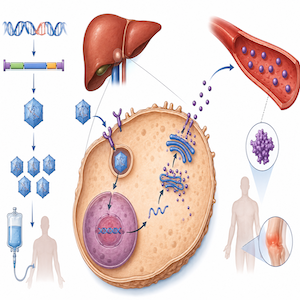
Background: Gene therapy offers a transformative treatment option for hemophilia A (HA) by restoring endogenous factor VIII production. Shared decision-making (SDM) is a collaborative process that allows patients and clinicians to weigh the risks and benefits of complex treatment options such as gene therapy. However, no SDM tools exist for the specific needs of Italian persons with HA.
Materials and Methods: An Expert Advisory Board comprising nine experts (including hematologists, a psychologist, a methodology expert, a linguist and patient advocacy group representatives) met three times between March and July 2024 to discuss gene therapy for HA in Italy, and develop an SDM tool to determine the suitability of gene therapy for HA.
Results: The resulting modular SDM tool allows for structured interactions between clinicians and patients, while remaining sensitive to each patient’s level of readiness and understanding. The tool includes three components: Role Definition, Agenda Alignment, and Intention Setting, with supporting materials to guide patient-clinician dialogue and various resources (questionnaires, brochures, and visual aids).
Conclusions: Despite requiring confirmation in further studies, this SDM tool may represent a useful component of patient-centered care for HA in the Italian healthcare setting.
Downloads
Citations




Ethics Approval
GDM was a speaker or a member of a speaker bureau for BioMarin and CSL Behring; and was an ad-hoc speaker/consultant for BioMarin and CSL Behring. SBi and SBa have acted as consultants for BioMarin. EFG participated in speakers’ bureaus on behalf of a patient organization for BioMarin, CSL Behring, Novo Nordisk, Roche, and Sobi; participated in advisory boards on behalf of a patient organization for BioMarin, Pfizer, Roche, and Sobi; and participated in patient councils on behalf of a patient organization for BioMarin, Novo Nordisk, and Roche. MF has no competing interests to declare. MFM has acted as consultant and discus-sant for BioMarin, Novo Nordisk, Roche, and Sobi. MN has acted as consultant for Amgen, Bayer, CSL Behring, and Novo Nordisk; and received speaker fees from Amgen, Bayer, CSL Behring, Novartis, Novo Nordisk, Sanofi Genzyme, Sobi, and Takeda. RCS has acted as con-sultant for Bayer, Novo Nordisk, Roche, Sobi, and Takeda; and received speaker fees from Bayer, BioMarin, CSL Behring, Novo Nordisk, Kedrion, Roche, Sobi, and Takeda. GC received pay-ment or honoraria for lectures, presentations, speakers’ bureaus or educational events from Bi-oMarin, Bioviiix, CSL Behring, Kedrion, LFB, Novo Nordisk, Roche, Sanofi, Sobi, and Takeda, and participated on a Data Safety Monitoring Board or Advisory Board for Bayer, BioMarin, CSL Behring, Kedrion, LFB, Novo Nordisk, Pfizer, Roche, Sanofi, and TakedaCRediT authorship contribution
GDM, SBi, SBa, and GC contributed to developing the manuscript concept and plan; EFG, MF, MFM, MN, and RCS contributed to manuscript writing and editing. All the au-thors read and approved the final version of the manuscript and agreed to be accountable for all aspects of the work. Artificial intelligence (AI)-assisted technologies were not used in the creation of the submitted work.
Supporting Agencies
This project, the development of the manuscript and the open access publishing fee were supported by BioMarin, without conditions.How to Cite

This work is licensed under a Creative Commons Attribution-NonCommercial 4.0 International License.
Most read articles by the same author(s)
- Rita Carlotta Santoro, Roberto Minici, Marzia Leotta, Mariapia Falbo, Lucia Concetta Elia, Francesca Leo, Antonella Ierardi, Alessandra Strangio, Simona Prejanò, Vaccine-induced immune thrombotic thrombocytopenia following ChAdOx1 nCoV-19 vaccine: report of two cases , Bleeding, Thrombosis and Vascular Biology: Vol. 1 No. 2 (2022)
- Giovanni Di Minno, Gaia Spadarella, Ilenia Lorenza Calcaterra, Giancarlo Castaman, Paolo Simioni, Raimondo De Cristofaro, Cristina Santoro, Flora Peyvandi, Matteo Di Minno, The evolving landscape of gene therapy for congenital severe hemophilia: a 2024 state of the art , Bleeding, Thrombosis and Vascular Biology: Vol. 3 No. 2 (2024)
- Marco Marietta, Giancarlo Castaman, Comments on “Safe and effective anticoagulation use: case studies in anticoagulation stewardship” , Bleeding, Thrombosis and Vascular Biology: Vol. 4 No. 2 (2025)
- Giancarlo Castaman, Gene transfer in hemophilia B: a big step forward , Bleeding, Thrombosis and Vascular Biology: Vol. 2 No. 2 (2023)
- Lisa Pieri, Silvia Linari, Francesca Salvianti, Monica Attanasio, Giancarlo Castaman, Impaired platelet function in Hermansky-Pudlak syndrome associated with novel mutations in HPS3, HPS6 and HPS8 genes , Bleeding, Thrombosis and Vascular Biology: Vol. 3 No. 3 (2024)
- Silvia Linari, Renato Marino, Marzia Leotta, Antonio Coppola, Patrizia Di Gregorio, Augusto Bramante Federici, Flora Peyvandi, Cristina Santoro, Ezio Zanon, Rita Carlotta Santoro, The landscape of rare coagulation factor deficiency management in Italy: a national hemophilia center survey , Bleeding, Thrombosis and Vascular Biology: Vol. 4 No. 3 (2025)
- Ezio Zanon, Giancarlo Castaman, Augusto Bramante Federici, Maria Elisa Mancuso, Gianfranco Pasut, Alberto Tosetto, Angiola Rocino, Rita Carlotta Santoro, Bioequivalence of von Willebrand factor-containing concentrates: implications for the choice in patients with von Willebrand disease. A position paper from the Italian Association of Hemophilia Centers , Bleeding, Thrombosis and Vascular Biology: Vol. 5 No. 1 (2026)
- Silvia Linari, Lisa Pieri, Raffaella Pasquino, Eleonora Piellucci, Monica Attanasio, Francesca Salvianti, Giancarlo Castaman, Efficacy, safety and surgical management with concizumab prophylaxis in three young patients affected by severe hemophilia with inhibitors , Bleeding, Thrombosis and Vascular Biology: Vol. 5 No. 2 (2026)
- Renato Marino, Silvia Linari, Marzia Leotta, Antonio Coppola, Chiara Biasoli, Maria Elisa Mancuso, Flora Peyvandi, Cristina Santoro, Ezio Zanon, Rita Carlotta Santoro, Diagnostic and management practices for inherited fibrinogen disorders: a nationwide survey of Italian Hemophilia Treatment Centers , Bleeding, Thrombosis and Vascular Biology: Vol. 4 No. 3 (2025)
- Tiziano Martini, Chiara Gorio, Cristina Dainese, Rita Carlotta Santoro, Giancarlo Castaman, Hemophilia-free mind: a call to action , Bleeding, Thrombosis and Vascular Biology: Vol. 5 No. 1 (2026)