

Anticoagulation in advanced renal failure: do factor XI/XIa inhibitors represent the long-awaited shift?
All claims expressed in this article are solely those of the authors and do not necessarily represent those of their affiliated organizations, or those of the publisher, the editors and the reviewers. Any product that may be evaluated in this article or claim that may be made by its manufacturer is not guaranteed or endorsed by the publisher.
Authors
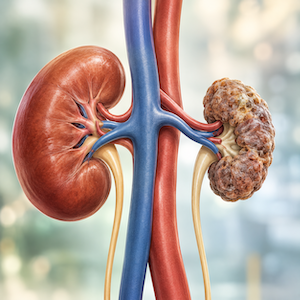
Advanced chronic kidney disease (CKD), particularly stages G4-G5 and dialysis-dependent kidney failure, is one of the most challenging settings for anticoagulant therapy because thrombotic and bleeding risks coexist and often increase in parallel. Conventional anticoagulants, including vitamin K antagonists, direct oral anticoagulants and heparins, have important limitations in this population, owing to altered pharmacokinetics, limited evidence from randomized trials and an intrinsically unstable hemostatic balance. Inhibitors of factor XI (FXI) and activated factor XI (FXIa) have emerged as a novel strategy designed to attenuate thrombus amplification while preserving physiological hemostasis. Advanced CKD provides a particularly attractive clinical model in which to evaluate this concept, since it combines systemic thrombotic risk with uremic bleeding tendency and, in patients undergoing hemodialysis, repeated activation of the contact pathway by the extracorporeal circuit. This narrative review summarizes the hemostatic abnormalities of advanced CKD, discusses the limitations of currently available anticoagulants, reviews the biological rationale for FXI/FXIa inhibition and critically examines the available phase II clinical evidence in patients with advanced renal disease. Although early studies suggest a favorable safety profile and support the biological plausibility of this therapeutic approach, definitive evidence of clinical benefit is still lacking. Dedicated phase III trials will determine whether selective FXI inhibition can truly improve the net clinical benefit of anticoagulation in advanced CKD by dissociating the protection for pathological thrombosis from the impairment of physiological hemostasis.
Downloads
Citations




Ethics Approval
Not applicableCRediT authorship contribution
D.P. conceived the review, performed the literature search, drafted the manuscript, and coordinated the contributions of all authors. E.B., D.M., and I.M. contributed to the literature search and to the drafting of specific sections, tables, and figures. All authors reviewed and approved the final manuscript.
Supporting Agencies
None. No specific funding was received for this work.Data Availability Statement
Not applicable.
How to Cite

This work is licensed under a Creative Commons Attribution-NonCommercial 4.0 International License.



