

Oral Communications and Posters
Vol. 5 No. s3 (2026): Abstracts of the XXIX National Congress of the Italian Society for the Study of Hemostasis and Thrombosis, 2026

PO158 | A RARE CASE OF ISCHEMIC STROKE: CAROTID WEBS
C. Mazzei, I. Costanzo, D. Fumarulo, S. Bernardi, G. Trinchera, M. Littera, M. Mazzetti, C. Tamburini | Medicina Interna Interdisciplinare, A.O.U. Careggi, Firenze, Italy
Publisher's note
All claims expressed in this article are solely those of the authors and do not necessarily represent those of their affiliated organizations, or those of the publisher, the editors and the reviewers. Any product that may be evaluated in this article or claim that may be made by its manufacturer is not guaranteed or endorsed by the publisher.
All claims expressed in this article are solely those of the authors and do not necessarily represent those of their affiliated organizations, or those of the publisher, the editors and the reviewers. Any product that may be evaluated in this article or claim that may be made by its manufacturer is not guaranteed or endorsed by the publisher.
Published: 26 October 2026
5
Views
2
Downloads
Authors
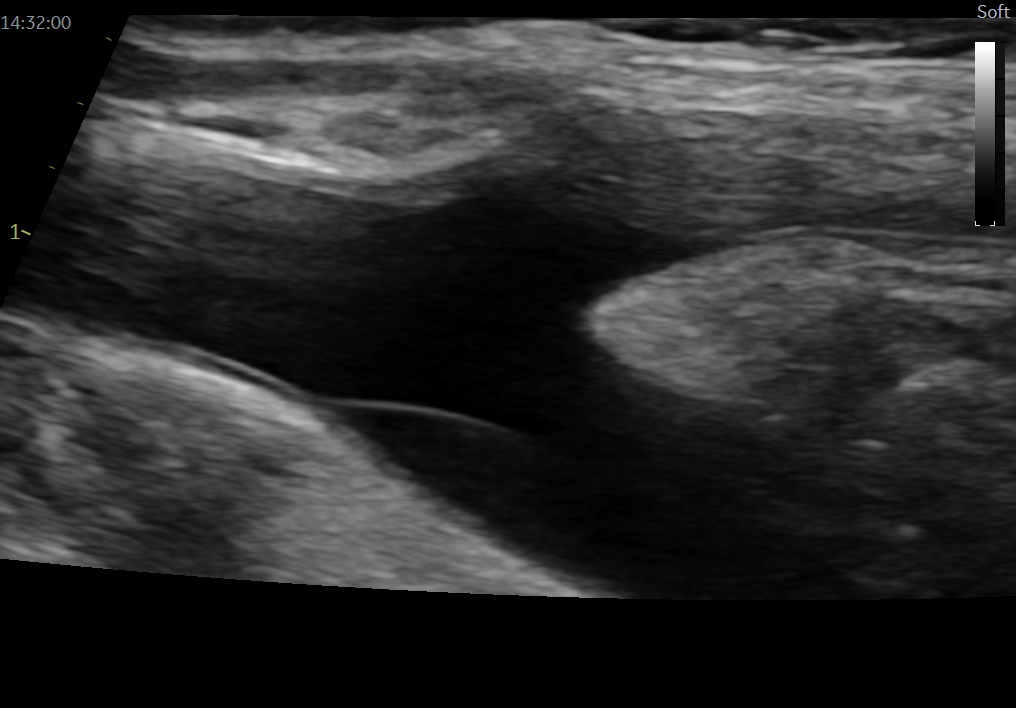
Case report. A 63-year-old woman with history of hypertension and a previous right atrial myxoma, treated 2-years prior with mass removal surgery, shows up for sudden symptoms of left facial paresthesia, right retrobulbar pain, clumsiness in the upper limbs and confusion. The CT cranial scan showed an ischemic right area cortico-subcortical temporo-parietal; the CT angiography and MRI confirmed an occlusion of the right middle cerebral artery’s M2 branch. As a collateral finding on CT angiogram, an opacification defect was reported at right carotid bulbs, suspicious for CaWeb. The ischemic event was classified as minor stroke (NHISS=3) therefore dual antiplatelet therapy was started. In view of the angiographic finding, a DUS of supre-aortic trunks was performed, which confirmed the suspect of carotid web. Meanwhile, other causes of stroke were ruled out by transcranial echocolordoppler which excluded the possibility of a patent foramen ovale (PFO) and an extensive electrocardiographic study excluded arrhythmic events. Lastly a transthoracic echocardiogram and the subsequent transesophageal echocolordoppler were performed, which reported the presence of mobile material at the left atrial appendage, of doubtful interpretation between myxoma recurrence or thrombotic material adhered to the Teflon residues left from the myxoma operation as a complication of the procedure. Given the new findings, and since a cardio-embolic stroke could not be ruled out at that point, warfarin therapy was promptly undertaken, and the patient was transferred to a surgical setting for subsequent removal of the mass and histological examination.
Conclusions. This clinical case confronted us with two possible causes of ischemic stroke, both possible, but which were ultimately given as large-vessel cardio-embolic stroke, considering the higher probability associated. However, the possibility of an event related to CaWeb, even if rare, shouldn’t completely be ruled out. The prevalence in patients with ischemic stroke is around 1-1,2%, however in patients with cryptogenic stroke, especially in cases with no other clear risk factors, the prevalence of CaWeb is markedly higher. One case-control study identified CaWeb to be present in 9,4% of patients under age 60 with cryptogenic stroke. Carotid webs should always be excluded in all cases of cryptogenic ischemic events, especially in young patients without relevant risk factors, even if the diagnosis remains one of exclusion.
Downloads
Download data is not yet available.
Citations




How to Cite
1.
Mazzei C. PO158 | A RARE CASE OF ISCHEMIC STROKE: CAROTID WEBS: C. Mazzei, I. Costanzo, D. Fumarulo, S. Bernardi, G. Trinchera, M. Littera, M. Mazzetti, C. Tamburini | Medicina Interna Interdisciplinare, A.O.U. Careggi, Firenze, Italy. Bleeding Thromb Vasc Biol [Internet]. 2026 Oct. 26 [cited 2026 Oct. 29];5(s3). Available from: https://www.btvb.org/btvb/article/view/974
Copyright (c) 2026 The Author(s)


This work is licensed under a Creative Commons Attribution-NonCommercial 4.0 International License.



