

Oral Communications and Posters
Vol. 5 No. s3 (2026): Abstracts of the XXIX National Congress of the Italian Society for the Study of Hemostasis and Thrombosis, 2026

PO148 | ANALYTICAL DISCREPANCY IN PLATELET COUNTING REVEALING MYH9-RD: A CASE REPORT
M. De Girolamo, A. Marrocchi, F. Vitone, M. Scapaticci, M. Bovara, T. Papillo, R. Mancini | Laboratorio Unico Metropolitano, Bologna, Italy
Publisher's note
All claims expressed in this article are solely those of the authors and do not necessarily represent those of their affiliated organizations, or those of the publisher, the editors and the reviewers. Any product that may be evaluated in this article or claim that may be made by its manufacturer is not guaranteed or endorsed by the publisher.
All claims expressed in this article are solely those of the authors and do not necessarily represent those of their affiliated organizations, or those of the publisher, the editors and the reviewers. Any product that may be evaluated in this article or claim that may be made by its manufacturer is not guaranteed or endorsed by the publisher.
Published: 26 October 2026
6
Views
2
Downloads
Authors
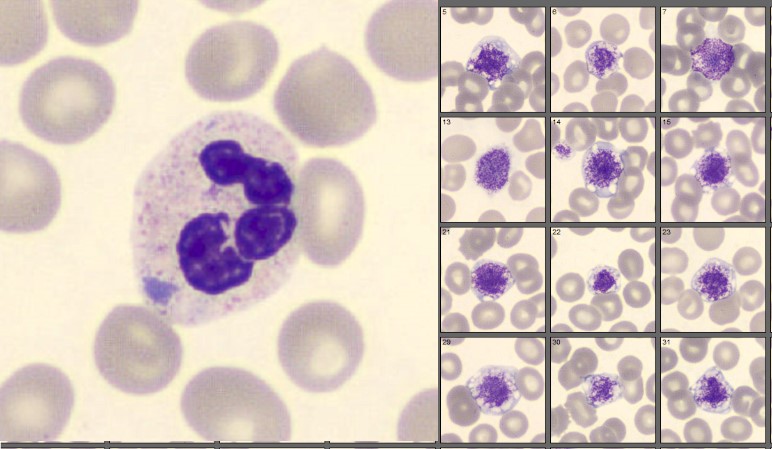
Case Report. A 31-year-old pregnant woman underwent routine first-trimester blood testing, revealing severe thrombocytopenia (5,000/μL) measured by impedance methodology, with otherwise normal hematological parameters. Platelet histogram and leukocyte scattergrams suggested the presence of giant platelets. Subsequent platelet counting using fluorescence methodology showed a higher value (19,000/μL), highlighting a significant discrepancy between the two methods. Peripheral blood smear examination confirmed true thrombocytopenia, excluded platelet clumping, and demonstrated numerous giant platelets, some comparable in size to erythrocytes. Additionally, basophilic cytoplasmic inclusions were observed in neutrophils. Further clinical history revealed a known diagnosis of MYH9-related disease, and the inclusions were interpreted as Döhle-like bodies, a pathognomonic feature of the condition. Longitudinal data showed persistently low but stable platelet counts (mean ~30,000/μL). No evidence of renal involvement was found, with no proteinuria or hematuria, while mild elevation of liver enzymes suggested possible hepatic involvement. The discrepancy between counting methods was attributed to the presence of macroplatelets, which may be misclassified as red blood cells inmpedance-based systems, whereas fluorescence methods provide more accurate platelet identification.
Conclusions. This case highlights the importance of a comprehensive and integrated approach to thrombocytopenia, particularly during pregnancy, when common benign or gestational causes may obscure rare inherited conditions. Morphological evaluation of peripheral blood smear remains essential for identifying key diagnostic features such as giant platelets and neutrophil inclusions. The observed discrepancy between platelet counting methods underscores the limitations of impedance-based systems in the presence of macrothrombocytes and supports the use of fluorescence-based techniques for accurate quantification. Awareness of MYH9-related disease laboratory features is crucial to avoid misdiagnosis and inappropriate treatment, ensuring proper clinical management and follow-up.
Downloads
Download data is not yet available.
Citations




How to Cite
1.
De Girolamo M. PO148 | ANALYTICAL DISCREPANCY IN PLATELET COUNTING REVEALING MYH9-RD: A CASE REPORT: M. De Girolamo, A. Marrocchi, F. Vitone, M. Scapaticci, M. Bovara, T. Papillo, R. Mancini | Laboratorio Unico Metropolitano, Bologna, Italy. Bleeding Thromb Vasc Biol [Internet]. 2026 Oct. 26 [cited 2026 Oct. 29];5(s3). Available from: https://www.btvb.org/btvb/article/view/964
Copyright (c) 2026 The Author(s)


This work is licensed under a Creative Commons Attribution-NonCommercial 4.0 International License.



