


CO-15 | HEMOPHILIA AND PHYSICAL ACTIVITY: A SURVEY ON THE CURRENT STATUS OF SPORTS ACCESSIBILITY IN THE ITALIAN POPULATION
L. Laterza1, M. Attanasi1, C. Cassone2, P. Giordano3, G. Lassandro3 | 1University of Bari "Aldo Moro", Interdisciplinary of Medicine, Bari, Italy; 2Fedemo, Milano, Italy; 3Pediatric Haemophilia Center - AOUC Pol. Giovanni XXXIII, University of Bari "Aldo Moro", Italy
All claims expressed in this article are solely those of the authors and do not necessarily represent those of their affiliated organizations, or those of the publisher, the editors and the reviewers. Any product that may be evaluated in this article or claim that may be made by its manufacturer is not guaranteed or endorsed by the publisher.
Authors
Background and Aims. Hemophilia is a congenital, X-linked bleeding disorder, characterized by a high risk of spontaneous and post-traumatic intra-articular hemorrhages. Historically, people with hemophilia (PWH) were advised to restrict their participation in physical activity to avoid bleeding. Recently, the introduction of personalized prophylactic therapies has significantly improved musculoskeletal well-being, ensuring better hemostatic protection. In this new scenario, physical exercise is recognized not only as a preventive tool against chronic hemophilic arthropathy but also as an essential element to improve quality of life and social inclusion in pediatric and young adult patients. The aim of this study is to analyze the current landscape regarding accessibility and participation in sports activities within a national cohort of PWH. The survey aims to analyze the frequency of practiced sports, perceived benefits, and any remaining athletic barriers that still limit full patient engagement in physical activities.
Materials and Methods. An observational study was conducted by administering, with the support of the Italian Federation of Hemophilia Associations (Fedemo), an online questionnaire to Italians with hemophilia A and B, of all severities. The 11-item questionnaire collected demographic, clinical, and sports accessibility data.
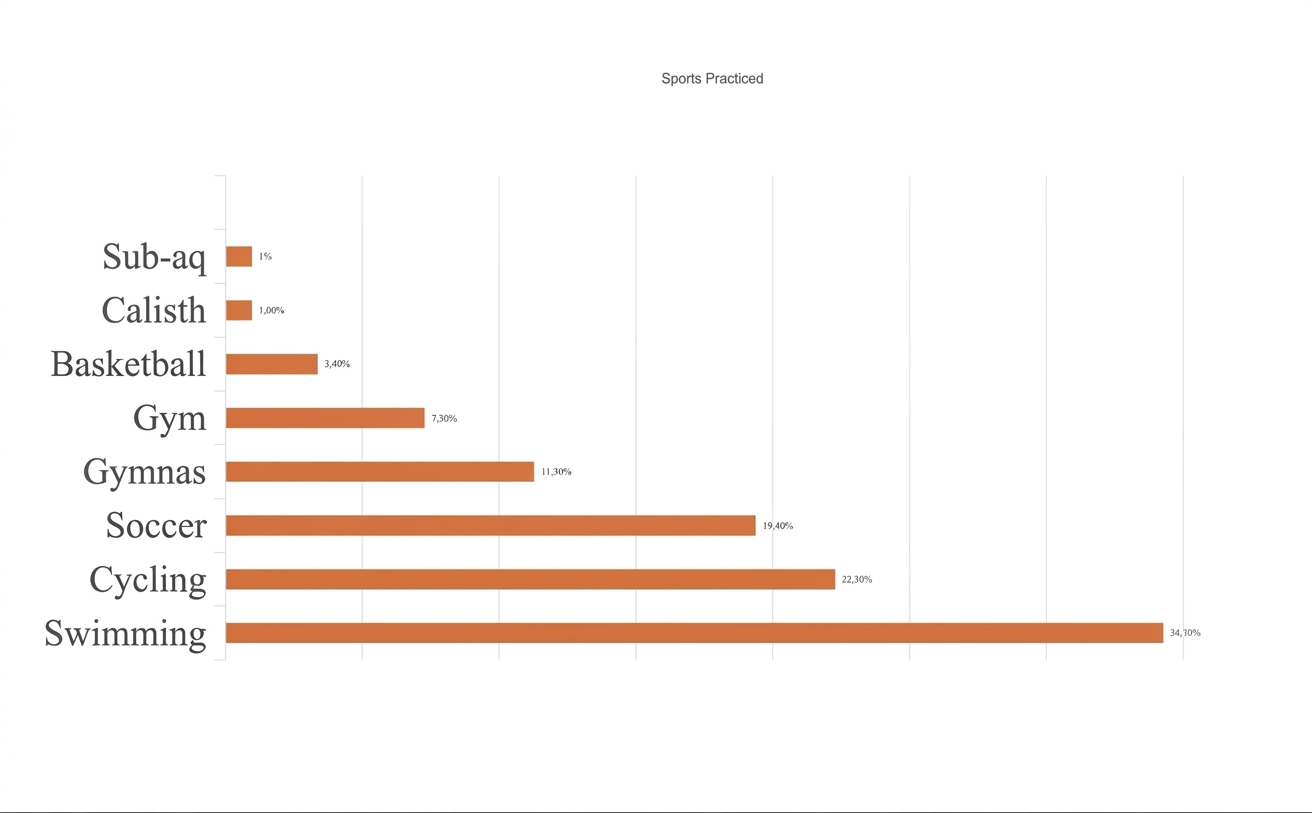
Results. A total of 35 responses were collected, evenly distributed across the national territory (27% in Northern, 28% in Central, and 45% in Southern Italy). Of the sample, 47% were under 40 years of age, and 90% of respondents were on a prophylactic regimen. Regarding physical activity, 56.2% had never engaged in it, while 43.8% currently practice or have previously practiced it. Among the latter, 62.76% engage in organized sports, whereas 27.4% lack medical clearance for competitive or non-competitive sports. The most common disciplines were swimming, cycling, soccer, and gymnastics/fitness. Additionally, 33.3% engage in physical activity for at least 2 hours per week.
Conclusions. This is the first survey on sport participation in Italian PWH. The results confirm that physical activity is not a perceived barrier but is becoming an essential component of disease management. However, there is a clear need to develop standardized protocols for the safe integration of physical exercise, thereby supporting patients in accessing sports activities and streamlining the medical certification process
Downloads
Citations




How to Cite

This work is licensed under a Creative Commons Attribution-NonCommercial 4.0 International License.



