
Trypsin is as procoagulant as factor XIIa
All claims expressed in this article are solely those of the authors and do not necessarily represent those of their affiliated organizations, or those of the publisher, the editors and the reviewers. Any product that may be evaluated in this article or claim that may be made by its manufacturer is not guaranteed or endorsed by the publisher.
Authors
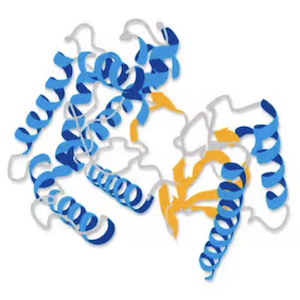
To help shed light on the roles of the contact pathway of blood clotting, we quantified the relative procoagulant activities of each of the serine proteases of the clotting cascade. We added varying concentrations of the activated forms of different clotting proteases to normal human plasma and recorded the time to clot formation. We also compared these clotting activities to that of the nonspecific serine protease, trypsin. The activated proteases of the final common pathway of blood clotting exhibited relatively strong clotting activity and achieved 100-second clotting times at pM to very low nM concentrations. In contrast, factor XIIa and plasma kallikrein exhibited weak clotting activity such that it required nearly 100 nM factor XIIa to achieve a 100-second clotting time, and for plasma kallikrein this was not achieved even with 100 nM enzyme. Trypsin was slightly more procoagulant than factor XIIa. We conclude that the enzymes that trigger the contact pathway of blood clotting have remarkably weak procoagulant activity. The implications for the roles of factor XII and trypsin in thrombotic disorders and pancreatitis are discussed.
Downloads
Citations




Ethics Approval
Not applicableCRediT authorship contribution
JM: conceptualization; writing – review and editing; supervision; funding acquisition. SAS: conceptualization; investigation; writing – initial draft. All authors have read and approved the final version of the manuscript and agreed to be accountable for all aspects of the work.
Supporting Agencies
This research was funded by grant R35 HL171334 from the National Heart, Lung and Blood institute of the National Institutes of Health. The content is solely the responsibility of the authors and does not necessarily represent the official views of the National Institutes of Health.Data Availability Statement
The relevant data are included in the manuscript. Further original data are available from the corresponding author upon request.
How to Cite

This work is licensed under a Creative Commons Attribution-NonCommercial 4.0 International License.