Original Articles
Vol. 5 No. 3 (2026): In memory of Armando D’Angelo

Development and implementation of a mathematical model for inpatient warfarin dosing: rationale and methods
Publisher's note
All claims expressed in this article are solely those of the authors and do not necessarily represent those of their affiliated organizations, or those of the publisher, the editors and the reviewers. Any product that may be evaluated in this article or claim that may be made by its manufacturer is not guaranteed or endorsed by the publisher.
Published: 28 August 2026
0
Views
0
Downloads

Authors

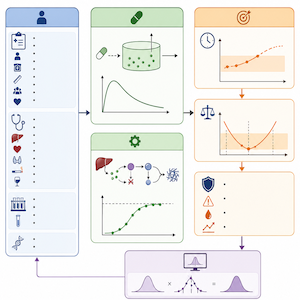
Despite a narrow therapeutic range, need for frequent monitoring, and continuous dosing adjustment, vitamin K antagonists like warfarin remain widely prescribed worldwide owing to superiority over newer anticoagulants in key patient populations and low cost. Several models exist to guide warfarin dosing in stable outpatients, but none validated for inpatient warfarin dosing. Instead, clinicians use blanket pre-specified warfarin initiation strategies, and adjust the dose based on clinical gestalt. There is a need for warfarin dosing guidance during the inpatient period to improve time to achieve the therapeutic effect, potentially decrease adverse events related to over- or under-anticoagulation, and reduce hospitalization times. Warfarin response is characterized by inter-individual and inter-temporal variability. At the same time, modern electronic health record infrastructure has made relevant data easily accessible. A simplified pharmacokinetic/pharmacodynamic (PK/PD) model for inpatient warfarin dosing has been previously described, but no implementation has been disseminated. This methods paper is intended to introduce a stepwise derivation and an open-source implementation of this previously described simplified PK/PD model designed for warfarin dosing in the inpatient setting that can be used for subsequent large-scale validation. The model has the potential, after extensive validation and extension, to serve as the core of a clinical decision support system that can accurately provide dosing recommendations to clinicians.

Downloads

Download data is not yet available.

Citations

1. Patel S, Singh R, Preuss CV, et al. Warfarin. In: StatPearls [Internet]. Treasure Island (FL): StatPearls Publishing; 2025 [cited 2025 Apr 21]. Available from: http://www.ncbi.nlm.nih.gov/books/NBK470313/
2. Fuster V, Rydén LE, Cannom DS, et al. ACC/AHA/ESC 2006 guidelines for the management of patients with atrial fibrillation: executive summary. J Am Coll Cardiol 2006;48:854-906.
3. Kaye JB, Schultz LE, Steiner HE, et al. Warfarin pharmacogenomics in diverse populations. Pharmacotherapy 2017;37:1150-63.
4. Cross B, Turner RM, Zhang JE, et al. Being precise with anticoagulation to reduce adverse drug reactions: are we there yet? Pharmacogenomics J 2024;24:1-23.
5. Geerts WH, Bergqvist D, Pineo GF, et al. Prevention of venous thromboembolism: American College of Chest Physicians evidence-based clinical practice guidelines. Chest 2008;133:381S-453S.
6. Kearon C, Akl EA, Comerota AJ, et al. Antithrombotic therapy for VTE disease: American College of Chest Physicians evidence-based clinical practice guidelines. Chest 2012;141:e419S-e496S
7. Kim YK, Nieuwlaat R, Connolly SJ, et al. Effect of a simple two-step warfarin dosing algorithm on anticoagulant control as measured by time in therapeutic range: a pilot study. J Thromb Haemost 2010;8:101-6.
8. Van Spall HGC, Wallentin L, Yusuf S, et al. Variation in warfarin dose adjustment practice is responsible for differences in anticoagulation control between centers and countries. Circulation 2012;126:2309-16.
9. Cohen J, Sinvani L, Wang JJ, et al. Warfarin quality metrics for hospitalized older adults. TH Open 2018;2:e242-9.
10. Cohen J, Thompson E, Sinvani L, et al. Assessment of warfarin algorithms for hospitalized adults: searching for a safe dosing strategy. J Thromb Thrombolysis 2019;48:570-9.
11. Metersky M, Eldridge N, Wang Y, et al. Predictors of warfarin-associated adverse events in hospitalized patients: opportunities to prevent patient harm. J Hosp Med 2016;11:276-82.
12. Zhao Y, Liu N, Wang Y, et al. A rolling-horizon pharmacokinetic pharmacodynamic model for warfarin inpatients in transient clinical states. Pers Med 2016;13:21-32.
13. Holford NHG. Clinical pharmacokinetics and pharmacodynamics of warfarin: understanding the dose-effect relationship. Clin Pharmacokinet 1986.
14. Vadher B, Patterson DLH, Leaning M. Prediction of the international normalized ratio and maintenance dose during the initiation of warfarin therapy. Br J Clin Pharmacol 1999;48:63-70.
15. Carter BL, Taylor JW, Becker A. Evaluation of three dosage-prediction methods for initial in-hospital stabilization of warfarin therapy. Clin Pharm 1987;6:37-45.
16. Bradbury J, Frostig R, Hawkins P, et al. JAX: composable transformations of python+numpy programs [Internet]. Google; 2018. Available from: https://github.com/google/jax
17. Kidger P. On neural differential equations. Oxford: University of Oxford; 2021
18. Blondel M, Berthet Q, Cuturi M, et al. Efficient and modular implicit differentiation [Internet]. arXiv; 2022 [cited 2025 Apr 24]. Available from: http://arxiv.org/abs/2105.15183
19. Google. Flax [Internet]. Google; 2025 [cited 2025 Apr 24]. Available from: https://github.com/google/flax
20. Gage BF, Eby CS, Johnson JA, et al. Use of pharmacogenetic and clinical factors to predict the therapeutic dose of warfarin. Clin Pharmacol Ther 2008;84:326-31.
21. Mahtani KR, Heneghan CJ, Nunan D, et al. Optimal loading dose of warfarin for the initiation of oral anticoagulation. Cochrane Database Syst Rev 2012;12:CD008685
22. Siguret V, Gouin I, Debray M, et al. Initiation of warfarin therapy in elderly medical inpatients: a safe and accurate regimen. Am J Med 2005;118:137-42.
23. Garcia P, Ruiz W, Loza Munárriz C. Warfarin initiation nomograms for venous thromboembolism. Cochrane Database Syst Rev 2016;2016:CD007699.
24. Kovacs MJ, Rodger M, Anderson DR, et al. Comparison of 10-mg and 5-mg warfarin initiation nomograms together with low-molecular-weight heparin for outpatient treatment of acute venous thromboembolism: a randomized controlled trial. Ann Intern Med 2003;138:714-9.
25. Lawrence JE, Fountain DM, Cundall-Curry DJ, et al. Do patients taking warfarin experience delays to theatre, longer hospital stay, and poorer survival after hip fracture? Clin Orthop Relat Res 2017;475:273-9.

Ethics Approval

Ethics approval for this exempt retrospective data analysis study was provided by the Northwell Health IRB (Protocol Number: 141089).

Supporting Agencies

This study was supported by the Broxmeyer Fellowship for Clinical Thrombosis. Compute funds were provided under internal departmental funding awarded by the Department of Medicine, Northwell.

How to Cite


1.
Tsaftaridis N, Goldin M, Ochani K, Levy T, Zanos TP, Spyropoulos AC. Development and implementation of a mathematical model for inpatient warfarin dosing: rationale and methods. Bleeding Thromb Vasc Biol [Internet]. 2026 Aug. 28 [cited 2026 Aug. 28];5(3). Available from: https://www.btvb.org/btvb/article/view/195