
Genomic profiling for thrombosis risk prediction in myeloproliferative neoplasms

All claims expressed in this article are solely those of the authors and do not necessarily represent those of their affiliated organizations, or those of the publisher, the editors and the reviewers. Any product that may be evaluated in this article or claim that may be made by its manufacturer is not guaranteed or endorsed by the publisher.
Authors
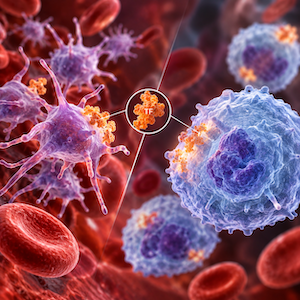
The main BCR-ABL-negative myeloproliferative neoplasms consist of polycythemia vera, essential thrombocythemia and primary myelofibrosis. They have been associated with an overall elevated risk of thromboembolism, including both venous and arterial events. Different risk factors for thrombosis have been identified in this patient population, including clinical but also molecular predictors. Accurate estimation of thrombotic risk could potentially allow for identification of patients who are the best candidates for pharmacological prophylaxis with an antiplatelet or anticoagulant agent. The genes for which most data on associated risk of thromboembolism are available are JAK2, CALR and MPL. The JAK2 V617 mutation is the most common driver alteration for polycythemia vera and has been clearly associated with approximately a doubling in the risk of venous thromboembolism compared with JAK2-negative myeloproliferative neoplasms. It is also found in about half of cases of essential thrombocythemia. CALR-mutated essential thrombocythemia has been associated with a lower risk of thromboembolic event, while there is less data about MPL given it low frequency of alterations. In later years more knowledge has emerged about mutations found in other genes altered in the blood and marrow of individuals with a myeloproliferative neoplasm. Risk stratification schemes have been derived using basic patient characteristics but so far no well validated model or clinical prediction rule includes any molecular predictor besides the JAK2 V617F mutation. Additional work is needed to validate associations for markers other than JAK2 and integrate this knowledge into clinically useful prediction models.
Downloads
Citations




How to Cite

This work is licensed under a Creative Commons Attribution-NonCommercial 4.0 International License.